West Virginia Financial Supervisor Creates a Reusable Tool to Fight Elder Financial Abuse
It started with a phone call, $15,000, and a shoe box.
Earlier this year, the elderly aunt of West Virginia Division of Financial Institutions Commissioner Dawn Holstein received a phone call from a stranger who claimed someone had accessed her bank account to buy computers. The caller said the problem could be resolved if her aunt immediately sent cash to an out-of-state address.
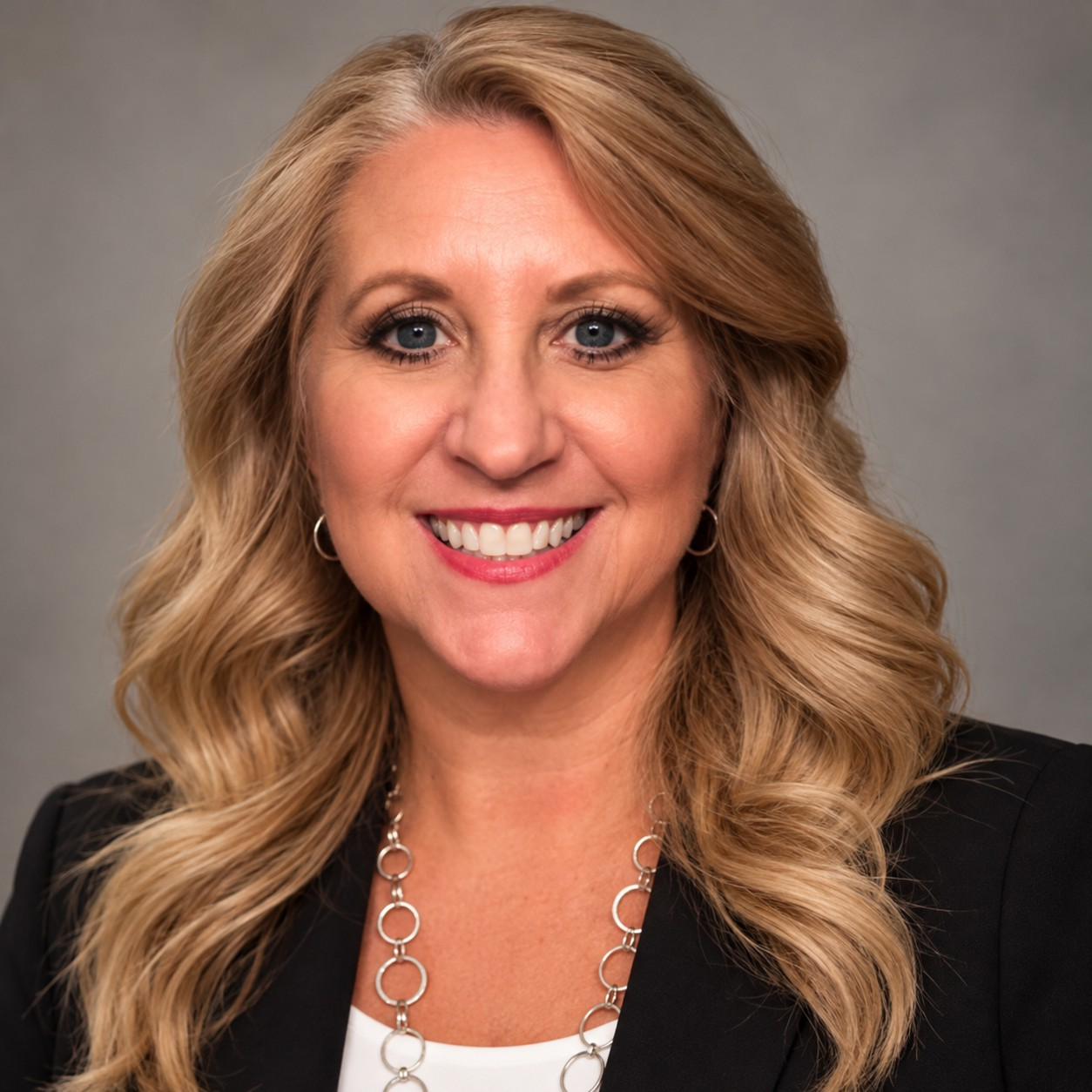
Worried, her aunt did as she was told. She packed $15,000 into a shoe box and promptly mailed it. On her walk back home, she ran into Holstein’s brother and explained she quickly needed to call someone with a tracking number.
“He froze, and it immediately clicked for him that this was a scam,” Holstein said. Her brother took the receipt and called the shipping center. Luckily, the package was still there, and he got it back.
Her aunt had no cellphone, no internet connection, and no online presence. She only had a landline. With just a few more minutes, the money would have been gone.
Learning more about scams
As a state supervisor, Holstein is well aware of the prevalence of financial scams. She heads a department in West Virginia that charters 32 depository institutions and licenses approximately 660 nonbank institutions like mortgage companies, money transmitters, and consumer lenders. All too often, the scams are not discovered until after the money is gone — something that is more prevalent with evolving technology.
Holstein says the psychology of financial scams has not changed; they still rely on fear, urgency, trust, and, sometimes, romance. But crypto and digital payments have changed their speed and reach. Cash can be converted into a nearly irreversible digital payment without the sender needing to be in the same state, or even country.
The elderly are, unfortunately, frequent targets, and the numbers are striking. The FBI’s 2025 Internet Crime Report found that for calendar year 2025, Americans over age 60 reported approximately $7.7 billion in losses. In addition, more than 42,000 older victims reported scams involving cryptocurrency, with about $4.3 billion tied to cryptocurrency scams that year. FinCEN, citing Federal Trade Commission data, reports that in 2024, Americans aged 60 and older were more than three times more likely than younger adults to report losing money through a crypto kiosk.
Holstein's approach
Holstein believes that consumer education is a crucial step in combating evolving threats. Now, that need is even greater as cybersecurity fraud has become more rampant for consumers who have computers and smartphones.
“As a regulator, our primary role is assisting financial institutions in helping them stay ahead of the next threat. It is always ongoing and an uphill battle,” Holstein said. “Most breaches and attacks are not because software or hardware failed, it is usually human intervention that has permitted that chink in the armor, that allows the cyber-attack to happen."
After receiving consumer and institution calls about scams that had occurred, and her aunt’s close call, Holstein began thinking about how her Division could provide education to other West Virginians as a deterrent, to break a scammer’s hold before the money moves.
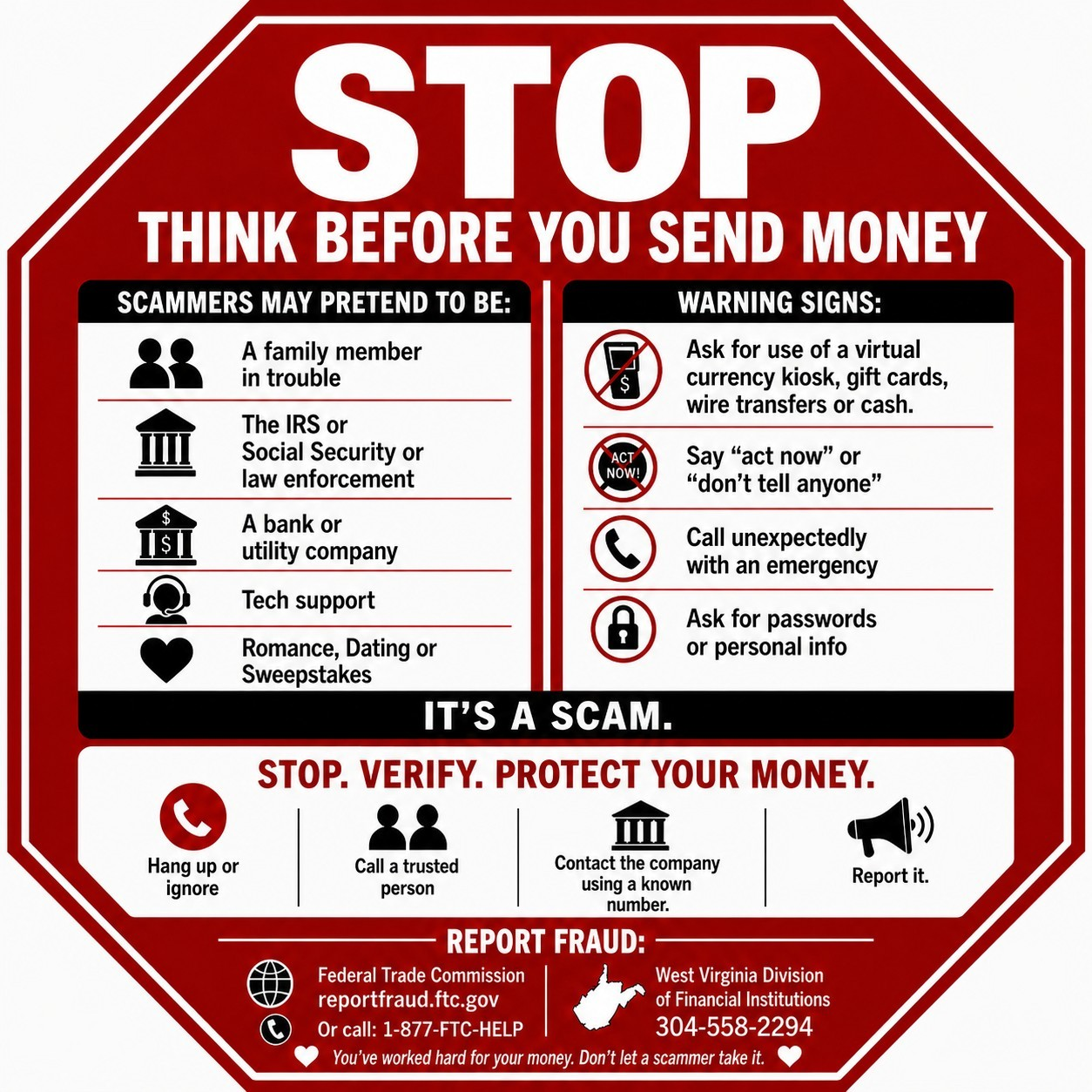
That’s when she came up with the idea of a refrigerator magnet in the shape of a stop sign. Holstein wanted to create a physical reminder that was low-tech and could be visible to consumers every day. The message is deliberately short: Stop. Verify. Protect your money.
The Division worked with AARP and West Virginia Senior Services on distribution, initially sending 30 magnets to each of the 55 senior centers in the state. The response has been overwhelmingly positive. Since August 2026, the Division has distributed 2,000 magnets and already has ordered 5,000 more.
Holstein is eager to share her initiative with others.
“I want to share our [magnet] design with anyone who wants it. It can be changed and edited as needed,” she said. “I think the stop sign is universal and hopefully will be memorable for someone to take a pause and break the cycle of thought that a scammer creates in their victim.”
View West Virginia’s elder financial abuse prevention tool on the agency’s website. For more information, contact the agency at [email protected]. To learn more about consumer protection efforts in your state, visit CSBS’s directory of state regulatory agencies.
Contact: Susanna Barnett, 202-407-7156, [email protected]
X: @CSBSNews
The Conference of State Bank Supervisors (CSBS) is the nationwide organization supporting a network of financial regulators from all 50 states, American Samoa, District of Columbia, Guam, Puerto Rico, and U.S. Virgin Islands. State regulators supervise 79% of all U.S. banks and a variety of non-depository financial services. CSBS, on behalf of state regulators, also operates the Nationwide Multistate Licensing System to license and register non-depository financial service providers in the mortgage, money services businesses, consumer finance, and debt industries.